
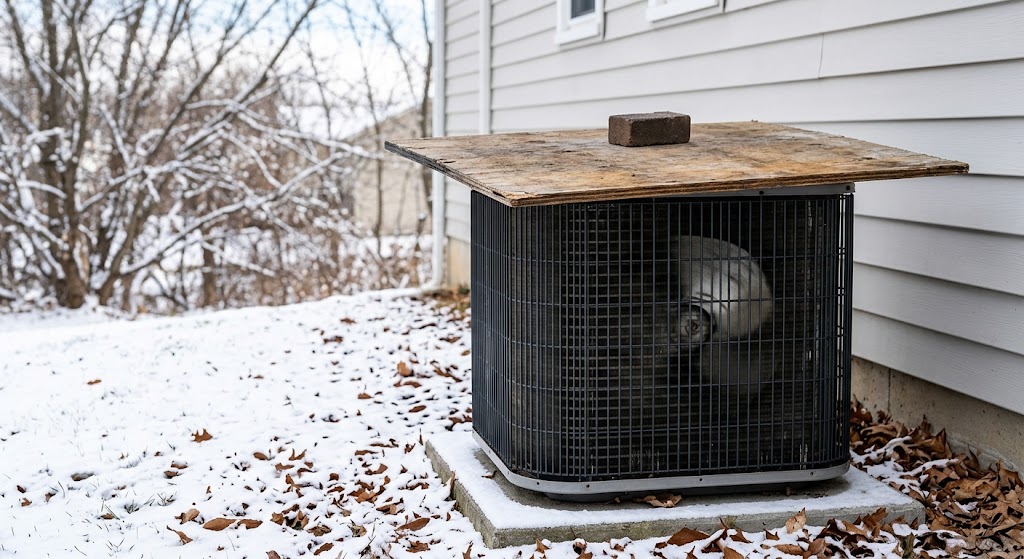
You generally should not cover your air conditioner in the winter with a full plastic tarp or airtight wrap. Modern outdoor AC units are engineered to endure sub-zero temperatures, snow, and ice. Tightly wrapping your unit traps internal moisture, which accelerates rust and corrosion, while creating an insulated nesting space for rodents that chew through electrical wiring.
Tightly wrapping an outdoor air conditioner often causes more damage than Midwest winter weather.
- Avoid Full Plastic Wraps: Sealed plastic tarps trap condensation that corrodes coils and electrical contacts.
- Prevent Pest Infestations: Enclosed condenser cabinets provide warm winter shelter for mice and squirrels.
- Protect Only the Top: If your unit sits under large trees or roof valleys, cover only the top to block falling debris.
- Never Cover a Heat Pump: Heat pumps run year-round for home heating and must never be covered.
Winter AC Cover Debate
As temperatures drop across Sioux City and the surrounding tri-state area, homeowners shift their focus to winterizing their homes. Along with clearing gutters and raking leaves, many people head outside with tarps and bungee cords, assuming their expensive cooling equipment needs protection from the cold.
It seems logical: if an appliance sits outside in heavy snow and freezing wind, wrapping it up should keep it safe.
However, HVAC engineers design outdoor condenser units specifically to withstand harsh outdoor conditions. Full covers frequently create far more mechanical problems than they solve.
Definition: Condenser Coil Corrosion The gradual degradation and rusting of an air conditioner’s aluminum fins and copper tubing caused by trapped moisture, lack of airflow, and chemical reactions with debris. Trapping humidity inside a sealed cover accelerates this deterioration significantly.
Why You Generally Should Not Cover Your Air Conditioner in the Winter
Before buying a custom-fit cover or tying down a tarp, consider the mechanical risks associated with sealing your outdoor unit:
- Trapped Condensation and Premature Rust: Outdoor condensers are open on all sides to allow moisture to evaporate naturally. When you wrap the unit in plastic or heavy vinyl, winter thaw-freeze cycles create condensation that cannot escape. This stagnant moisture rusts the fan motor, corrodes the aluminum coils, and degrades electrical connections.
- Rodent and Pest Damage: An outdoor condenser covered with a wind-blocking tarp looks like a luxury shelter to field mice, squirrels, and other pests. Once inside, animals use the interior insulation for nesting material and chew on the low-voltage control wiring, leading to expensive repairs when you turn the unit on in spring.
- Mold and Mildew Growth: A dark, damp, covered environment encourages mold and mildew to develop on the indoor-facing components of the cabinet, creating airflow blockages and musty odors.
How Different Winter AC Protection Methods Compare
Here is how common strategies compare for protecting an outdoor unit during freezing weather:
| Protection Method | Moisture & Rust Risk | Pest Nesting Risk | Debris Protection | Overall Recommendation |
| Full Plastic Tarp or Wrap | Extremely High; traps humidity inside. | High; creates an insulated den for mice. | Excellent against leaves and snow. | Not Recommended; causes rust and wiring damage. |
| Plywood or Top-Only Cover | Zero; sides remain 100% ventilated. | Low; open structure discourages nesting. | High; blocks falling ice and large branches. | Best Practice; protects against impact while breathing. |
| Completely Uncovered | Low; natural airflow dries moisture quickly. | Very Low; pests seek warmer shelter. | Low; leaves and icicles can enter top grille. | Safe & Standard; equipment is factory-designed for this. |
4 Steps to Safely Shut Down Your AC for the Cold Season
Instead of wrapping your outdoor unit like a package, follow these four maintenance steps to winterize your system safely:
- Shut Off the Outdoor Disconnect Switch: Locate the exterior electrical box near your condenser and flip the switch to “Off.” This prevents the air conditioner from accidentally turning on during a freak warm day or if someone bumps the thermostat.
- Clear Away Leaves and Vegetation: Rake back fallen leaves, weeds, and tall grass within a two-foot radius of the unit. Clear any loose pine needles or twigs that have settled inside the fan grille.
- Gently Clean the Outer Cabinet: On a mild afternoon, gently rinse away surface dirt and mud with a garden hose (do not use a pressure washer). Let the unit dry thoroughly before sub-freezing temperatures arrive.
- Add Top-Only Protection (If Needed): If your unit sits directly under tree limbs or a roof valley prone to falling icicles, place a simple piece of plywood across the top of the fan grille, weighted down with a brick. Leave all four louvered sides completely open to the air.
Frequently Asked Questions
Will snow and ice damage an uncovered air conditioner? No. Outdoor condensers are constructed with heavy-gauge galvanized steel and weather-resistant coatings. Snow resting on top of or around the unit will not hurt it as long as the sides can breathe.
Should I ever cover a heat pump in the winter? No. Never cover a heat pump. Unlike a standard AC that stays idle all winter, a heat pump runs continuously to heat your home. Covering it restricts air intake and will cause system failure.
When should I turn off the exterior AC power switch? Flip the outdoor disconnect switch once heating season begins. Turning it off prevents the unit from accidentally firing up during sudden autumn warm spells, protecting internal components.
What should I do if a fallen tree branch dents my condenser? Inspect the outer cabinet and internal copper tubing for punctures or leaks. If fins are bent or you suspect refrigerant loss, contact a technician for an inspection before turning the unit back on.
Can I use a commercial mesh cover instead of a plastic tarp? Yes. Breathable mesh covers designed only to block leaves while maintaining full airflow are safe to use. Avoid any solid vinyl or plastic wraps that trap moisture.
What should I do if my system needs attention before freezing weather hits? Schedule an inspection with our team. We ensure your outdoor unit is safely shut down while completing comprehensive heating maintenance to prepare your furnace for freezing temperatures.
Keep Your Home Warm and Your Equipment Protected
Taking proper care of your cooling equipment before the cold weather sets in protects your investment and ensures a hassle-free startup when warm days return. Pairing smart outdoor AC care with professional furnace maintenance keeps your entire HVAC setup running efficiently through every freeze.
Getting your home ready for freezing temperatures? Ensure your furnace is tuned and your system is protected. Schedule seasonal heating services, check out our full range of air conditioning solutions, explore our winter HVAC preparation guide, or request upfront estimates by contacting O’Connor Heating & Cooling today.
By: The O’Connor Heating & Cooling Team
Last Updated: Fall 2026
Proudly serving Sioux City, IA, and surrounding tri-state communities with reliable heating and cooling expertise for nearly 20 years.
Recent Comments