
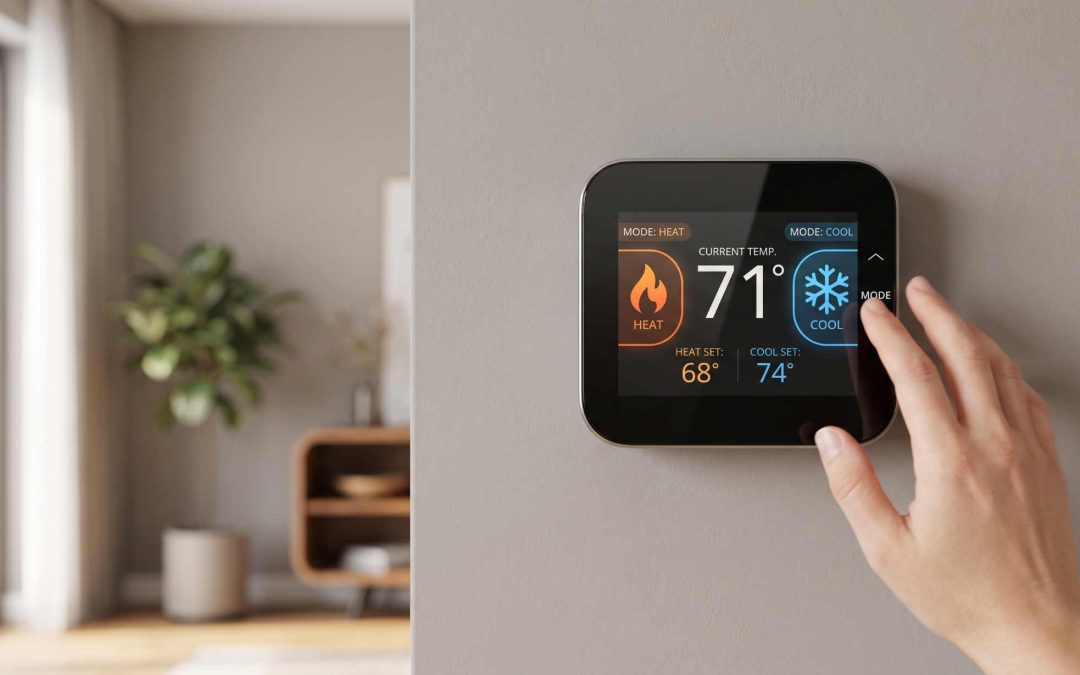
Switching between your air conditioner and heater on the same day will not damage your HVAC system as long as you wait at least five minutes between cycles. Modern thermostats and compressors need this brief window to allow internal refrigerant pressures to equalize safely. Failing to wait can short-cycle the compressor, trip electrical breakers, or blow a fuse.
Switching between heating and cooling during sudden weather shifts is safe when done correctly.
Observe the 5-Minute Rule: Always wait at least five minutes when switching modes to protect your compressor.
Set a 5-Degree Buffer: Keep your cooling and heating setpoints spaced apart to avoid continuous cycling.
Use Thermostat “Auto” Mode: Modern smart controls handle transitions automatically with built-in delay protections.
Schedule Pre-Season Service: Ensure your furnace components are inspected before freezing nights arrive.
The Shoulder Season Thermostat Tug-of-War
Across Sioux City and the tri-state area, early autumn weather brings dramatic temperature swings. An afternoon high of 80°F can quickly plunge into the mid-40s overnight.
This dramatic shift leaves homeowners stuck in a daily dilemma: running the air conditioner during the heat of the day, only to crave the furnace once the sun goes down.
While your HVAC system is engineered to handle both heating and cooling, rapid switching without proper pauses can trigger unnecessary mechanical wear.
Definition: Refrigerant Pressure Equalization The physical process where high-pressure vapor on the discharge side and low-pressure vapor on the suction side balance out after an air conditioner shuts off. This pressure balance requires three to five minutes before the compressor motor can safely restart without excessive resistance.
What Happens If You Switch Too Fast?
When you suddenly flip your thermostat from “Cool” to “Heat” (or vice versa), the system faces immediate mechanical resistance if the compressor just finished a cycle:
Compressor Short-Cycling: Restarting a compressor against unequal head pressure forces the motor to draw locked-rotor amperage, creating intense heat and electrical stress.
Tripped Breakers and Blown Fuses: The sudden electrical surge can overload your home’s breaker panel or blow the low-voltage fuse on your furnace control board.
Reversing Valve Wear (Heat Pumps): On heat pump units, the reversing valve physically shifts the flow of refrigerant. Giving the system a pause prevents mechanical sticking within the valve.
4 Rules for Safely Switching Between Heating and Cooling
Follow these four steps to maintain indoor comfort during unpredictable Midwest weather swings without risking a system breakdown:
- Follow the Five-Minute Rule: If your AC is running and you want heat, switch your thermostat to “Off” first. Wait a full five minutes before moving the switch to “Heat” to let refrigerant pressures settle.
- Establish a Temperature Deadband: Avoid setting your heat to 70°F and your cooling to 71°F. Maintain a buffer of at least 4 to 5 degrees between your heating and cooling setpoints to prevent your system from battling itself.
- Leverage Smart Thermostat Auto Changeover: Upgrading to a smart thermostat eliminates user error. Most modern units include automatic changeover with pre-programmed safety delays that protect your equipment.
- Use Natural Ventilation When Practical: On mild evenings, shut your system off entirely and open screened windows to let cool nighttime breezes drop indoor temperatures naturally.
How to Manage Swing-Season Temperatures
Here is how common strategies compare for managing fluctuating indoor temperatures:
| Strategy | Mechanical Impact | Comfort & Efficiency |
| Manual Rapid Switching | High stress; risks compressor lockup and tripped electrical switches. | Poor; often leads to excessive energy consumption and constant temperature overshoot. |
| Thermostat Auto Mode | Low stress; built-in electronic delay timers safeguard compressors. | Excellent; maintains steady room comfort while protecting internal mechanical components. |
| Window Ventilation + Fan | Zero mechanical wear; HVAC equipment remains completely idle. | Great on mild nights, but ineffective during sudden, humid late-afternoon heat spikes. |
Frequently Asked Questions
How long should I wait before switching from AC to heat? Wait at least five minutes between shutting off your cooling and turning on your heat. This brief window allows internal pressures to equalize, preventing electrical surges and compressor motor damage.
Will switching between heating and cooling spike my energy bill? Frequent switching can increase energy bills if setpoints are too tight. Constantly cycling between cooling down and heating up a house wastes energy; maintaining a wider temperature gap prevents this waste.
What is the Auto setting on a thermostat? The Auto changeover setting automatically toggles between heating and cooling to keep indoor temperatures within a set range. Built-in manufacturer delays prevent the system from short-cycling or switching back and forth erratically.
Why does my AC compressor buzz when I switch to heat too quickly? That buzzing sound occurs when the compressor tries to turn on against high residual head pressure. If it cannot overcome the pressure, it draws excessive power and triggers its internal thermal overload protector.
Can running my furnace after the AC cause a burning smell? Yes. When your heating elements or heat exchanger sit unused through hot weather, dust accumulates. Turning on the heat for the first cold night burns off that harmless layer of dust within an hour.
What should I do if my system stops working after switching modes? Check your electrical breaker box to see if an electrical surge tripped the HVAC circuit. If the breaker is on but the system remains dead, call for emergency repair service.
Prepare Your System for the Cooler Weather Ahead
The transition from muggy afternoons to chilly nights is your home’s warning that freezing weather is just around the corner. Practicing safe thermostat habits protects your cooling components from unnecessary wear while ensuring your heating system is ready to carry the load when winter arrives.
Getting your home ready for the seasonal shift? Keep your home comfortable through every Midwest temperature swing. Schedule early heating services, check out our full range of air conditioning solutions, or request free replacement estimates by contacting O’Connor Heating & Cooling today.
By: The O’Connor Heating & Cooling Team
Last Updated: Fall 2026
Serving Sioux City and the surrounding tri-state communities with reliable heating and cooling expertise for nearly 20 years.
Recent Comments