
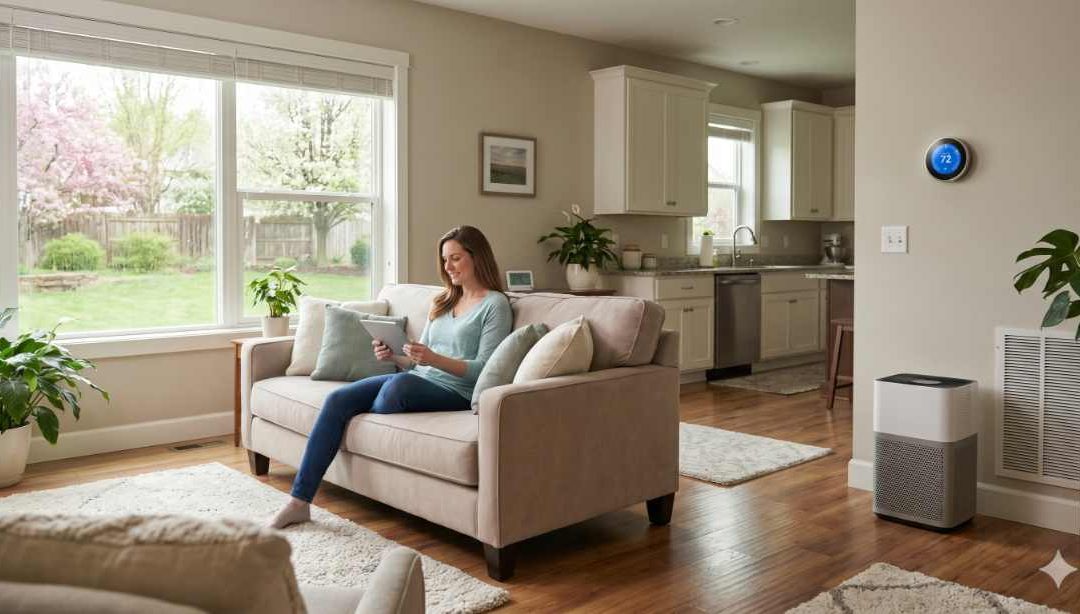
Humidity trap occurs in May when Siouxland temperatures are warm enough to hold moisture but too cool to trigger long air conditioning cycles, leaving indoor air damp and allergen-rich. To combat this, 2026 homeowners are shifting to predictive IAQ technology—including AI-powered humidity sensors and whole-home HEPA filtration—which actively monitors and manages air quality and moisture levels even when the AC isn’t actively cooling.
Managing spring moisture is essential for respiratory health and home preservation.
- Monitor Indoor Levels: Keep indoor humidity between 30% and 50% to prevent mold and dust mite growth.
- Upgrade to HEPA: 2026 filtration standards now allow for whole-home HEPA-level air cleaning via your HVAC system.
- Test AI Sensors: Utilize smart thermostats with predictive sensors that can run the fan or dehumidifier independently.
- Check the Rebates: Both MidAmerican and Black Hills Energy offer 2026 incentives for smart controls and high-efficiency upgrades.
Why May is the Most Dangerous Month for Siouxland IAQ
In Sioux City, May temperatures often swing between 50°F and 80°F. While this weather is pleasant, it creates a stagnant environment inside your home. Because your air conditioning isn’t running long enough to pull moisture out of the air, your home becomes a greenhouse for spring allergens.
Without active dehumidification, common Siouxland triggers like oak and maple pollen, as well as agricultural dust, settle into your furniture and carpets. This is why many families find their allergies are actually worse inside the house during May than they are outdoors.
The 2026 Shift: From Passive Filters to Predictive Sensors
In 2026, indoor air quality has moved from a “nice-to-have” to a health-critical upgrade. We are seeing a major transition toward “Humidity Intelligence.”
Definition: Predictive IAQ A smart HVAC configuration that uses AI-driven sensors to monitor VOCs, CO2, and humidity levels in real-time. The system automatically adjusts ventilation and filtration speeds before pollutants reach a detectable level for humans.
Instead of just waiting for you to feel “stuffy,” a modern system equipped with sensors will recognize a spike in moisture or pollen and engage the blower or dehumidifier to scrub the air. This ensures your home remains a sanctuary, regardless of the fluctuating Iowa weather.
Combatting Humidity Trap
To keep your home healthy this May, we recommend a three-tier defense strategy:
- HEPA-Level Filtration: Standard 1-inch filters only catch large dust. To handle fine spring pollen and bacteria, consider a 4-inch media cabinet or a HEPA-integrated system.
- Dedicated Dehumidification: If your basement feels “musty” before the summer heat hits, your heating system needs help. A whole-home dehumidifier works alongside your HVAC to pull gallons of water from the air daily.
- Duct Hygiene: All the filtration in the world won’t help if your “lungs” are dirty. A professional duct cleaning removes the buildup of agricultural dust that has settled over the winter.
2026 Rebate Tracker: Saving on Your Spring Upgrades
Thanks to the 2026 energy programs from our local providers, upgrading your home’s air quality is more affordable than ever:
- Black Hills Energy (Iowa): Offers up to $50 for smart thermostat installations and $50 for furnace maintenance every three years—perfect for a spring check-up.
- MidAmerican Energy: Continues to provide comprehensive residential rebates for equipment installed by December 31, 2026, including high-efficiency systems that support better IAQ.
- Federal Incentives: Don’t forget that many air quality upgrades can be bundled with high-efficiency heat pump projects to maximize your $2,000 Federal 25C Tax Credit.
Frequently Asked Questions
Why is my house so humid if the AC is working? In May, the AC doesn’t run long enough to remove moisture. This is called “short-cycling comfort.” Your home reaches the right temperature quickly, but the air remains damp because the system didn’t run long enough to dehumidify.
Can I add a HEPA filter to my old furnace? Most older furnaces can’t handle the air resistance of a HEPA filter without a specialized housing. We can perform a static pressure test on your HVAC system to see if your blower motor can handle an upgrade.
Do AI sensors actually help with allergies? Yes. By detecting rises in particulate matter and automatically increasing filtration, these sensors prevent the “pollen clouds” that typically enter when doors and windows are opened briefly.
How does duct cleaning impact humidity? While it doesn’t remove the moisture itself, duct cleaning removes the biological material (dust/skin cells) that mold and mildew need to grow in a humid environment.
Is it worth getting a dehumidifier if I have a new AC? A new AC is great, but a dedicated dehumidifier allows you to control moisture without over-cooling your home—a must for the cool, damp Siouxland mornings in May.
Will a smart thermostat help with air quality? The latest smart thermostats in 2026 can be linked to IAQ monitors to run the fan on a schedule or when air quality drops below a certain threshold.
Master Your Home’s Climate This May
Don’t let the “Shoulder Season” compromise your family’s health. The 2026 approach to home comfort is about more than just a number on the wall—it’s about the purity and balance of the air you breathe. Whether you need a deep duct cleaning or an upgrade to predictive sensors, O’Connor is your local partner for a healthier Siouxland home.
Ready to upgrade your home’s defense? Contact O’Connor Heating & Cooling today for an Indoor Air Quality assessment and take advantage of 2026 spring rebates!
By: The O’Connor Heating & Cooling Team
Last Updated: May 8, 2026
Providing Sioux City families with expert comfort and health solutions for nearly 20 years.
Recent Comments