
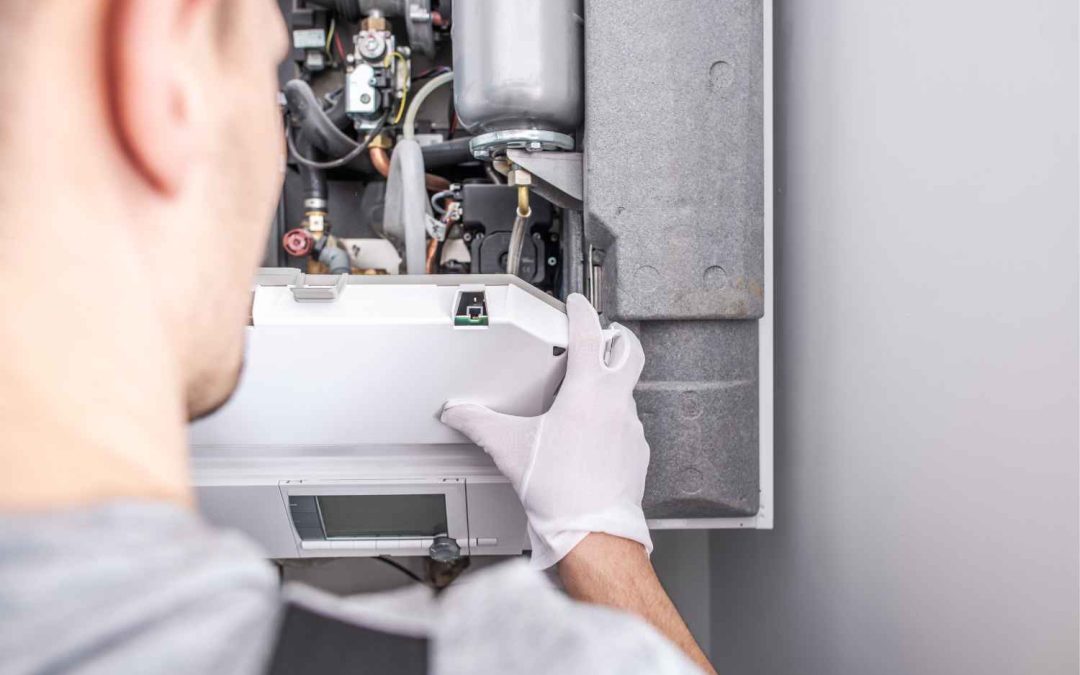
Deciding whether to repair or replace your furnace often comes down to a simple calculation. A common guideline is the “5,000 Rule”: multiply the estimated repair cost by the furnace’s age in years. If that number is more than $5,000, replacement is likely the more cost-effective option. For furnaces over 15 years old facing a major repair, investing in a new, high-efficiency unit almost always provides better long-term value and reliability.
When your furnace fails, you need to make a smart decision quickly. Here’s the tipping point analysis:
- Consider the Age: If your furnace is over 15 years old, replacement is often the wiser investment.
- Evaluate Repair Costs: A major repair (e.g., heat exchanger, control module) can cost half as much as a new unit.
- Calculate Future Savings: A new high-efficiency furnace can significantly lower your monthly energy bills.
- Factor in Reliability: Frequent breakdowns and rising repair costs signal the end of your furnace’s lifespan.
- Look at Performance: If your home has cold spots or poor air quality, a new system can solve those issues.
Table of Contents
- The Big Question: When is it Time to Replace Your Furnace?
- The Siouxland Tipping Point: 3 Key Factors
- How to Calculate the Value of a New Furnace
- When to Call O’Connor Heating & Cooling for an Expert Opinion
- Frequently Asked Questions: Furnace Repair vs. Replace
The Big Question: When is it Time to Replace Your Furnace?
In the middle of a Siouxland winter, a furnace failure is more than an inconvenience—it’s an emergency. But when you’re faced with a significant repair bill, the question becomes: do you fix the old unit or invest in a new one? Making the right choice can save you money, improve your home’s comfort, and give you peace of mind for years to come.
The Siouxland Tipping Point: 3 Key Factors
The decision to repair or replace your furnace usually hinges on three critical factors: age, repair cost, and overall performance.
Factor 1: The Age of Your Furnace
In Iowa and Nebraska, where winters demand a lot from our heating systems, a well-maintained furnace typically lasts between 15 and 20 years. If your unit is approaching or has surpassed this age range, it’s living on borrowed time. Components wear out, efficiency drops, and the risk of a complete breakdown increases dramatically.
Factor 2: The Cost and Frequency of Repairs
A single, minor repair on a younger furnace makes sense. But when the repairs become frequent or costly, you’ve reached a financial tipping point. Use this simple calculation to help you decide:
- Get the Repair Estimate: Ask your technician for the total cost to fix the current issue.
- Note Your Furnace’s Age: Determine how many years the unit has been in service.
- Do the Math: Multiply (Repair Cost) x (Furnace Age in Years).
- Analyze the Result: If the total is over $5,000, replacement is the financially sound choice. For example, a $400 repair on a 15-year-old furnace ($400 x 15 = $6,000) is a strong indicator to start looking at new units.
Factor 3: Your Furnace’s Performance and Efficiency
Is your furnace keeping you comfortable? Rising energy bills, uneven heating, and worsening air quality are all signs that your old furnace is no longer doing its job efficiently.
Definition: AFUE (Annual Fuel Utilization Efficiency) is a rating that measures how efficiently a furnace converts fuel into heat. An old furnace might have an AFUE of 60-70%, meaning 30-40% of the energy is wasted. Modern high-efficiency furnaces have AFUE ratings of 95% or higher.
| Furnace Type | AFUE Rating | How Much of Your Dollar Heats Your Home |
| Old Furnace (15+ years) | 60% – 70% | 60¢ – 70¢ |
| New High-Efficiency Furnace | 95% – 98% | 95¢ – 98¢ |
How to Calculate the Long-Term Value of a New Furnace
Investing in a new furnace isn’t just about avoiding repairs. A modern, high-efficiency unit provides a significant return on investment through lower energy bills, improved comfort, and enhanced safety features. Over its lifespan, a new system can save you thousands of dollars in energy costs alone, effectively paying for itself over time. Plus, you can often take advantage of local and federal energy rebates to lower the initial cost.
When to Call O’Connor Heating & Cooling for an Expert Opinion
Making the call to repair or replace can be tough. The experienced team at O’Connor Heating & Cooling provides honest, transparent advice to help you make the best decision for your home and budget. We can accurately diagnose your current system, provide clear repair estimates, and walk you through the costs and benefits of a new, high-efficiency installation.
Frequently Asked Questions: Furnace Repair vs. Replace
How long do furnaces last in Iowa? Given our cold winters, the average lifespan for a furnace in Iowa or Nebraska is about 15-20 years. Regular annual maintenance is crucial to reaching and sometimes exceeding that lifespan.
Is it worth fixing a 15-year-old furnace? It depends on the repair. For a minor, inexpensive fix, it might be worth it. For a major component failure like the heat exchanger or control module, that money is almost always better invested in a new system.
What is the average cost to replace a furnace in Siouxland? The cost varies widely based on the home’s size, the unit’s efficiency (AFUE rating), and installation factors. We provide free, no-obligation estimates to give you a precise and transparent quote.
How much can I save with a high-efficiency furnace? Upgrading from a 65% AFUE furnace to a 95% AFUE model can reduce your heating costs by over 30%. For many Siouxland families, this can translate to hundreds of dollars in savings each winter.
Will a new furnace heat my house more evenly? Yes. Modern furnaces with variable-speed blowers are much better at circulating air consistently, which helps eliminate the hot and cold spots that are common with older, single-stage systems.
Are there rebates available for new furnaces? Yes, utility companies and manufacturers often offer rebates for installing new, high-efficiency HVAC equipment. Our team can help you identify all the savings and rebates you’re eligible for.
Don’t wait for a complete breakdown to decide the future of your home’s heating. By evaluating your furnace’s age, performance, and repair needs, you can make a confident choice that ensures a warm and efficient winter.
By the O’Connor Heating & Cooling Team Last updated: December 1, 2025 Your Trusted Siouxland HVAC Experts
Recent Comments